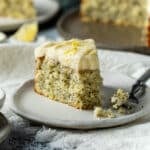
Lemon Poppyseed Cake
Light, fluffy and bursting with fresh lemon flavour, this lemon poppyseed cake is the perfect dessert for any occasion. Featuring a tangy lemon cream cheese frosting and ultra-tender crumb, it is a lemon lover’s dream!
Servings: 10
Calories: 506kcal
Equipment
- 1 springform cake tin (20 cm) with removeable base.
- electric beaters handheld or stand mixer.
Ingredients
For the cake
- 225 grams plain flour sifted
- ½ teaspoon salt regular table salt
- 1 teaspoon baking powder
- ¼ teaspoon bicarb soda baking soda
- 3 tablespoons poppyseeds
- 200 grams caster sugar
- zest of 2 large lemons
- 75 grams unsalted butter softened at room temperature. Plus extra butter, for greasing.
- 75 grams vegetable oil
- 2 large eggs room temperature
- 1 teaspoon vanilla bean paste or vanilla extract
- ⅔ cup buttermilk room temperature
- ⅓ cup lemon juice
For the cream cheese frosting
- 80 grams unsalted butter softened at room temperature
- 80 grams cream cheese regular, full-fat cream cheese (not the spreadable kind), softened at room temperature
- 280 grams icing sugar
- 1 teaspoon vanilla bean paste or vanilla extract
- zest of 1 lemon
- 1-2 tablespoons lemon juice
Instructions
- Pre-heat oven to 180°C/356 F. Use butter to grease a 20 cm springform cake tin and line the bottom of the tin with baking paper.
For the cake;
- Whisk the sifted flour, salt, baking powder, bicarb soda and poppyseeds together in a bowl, until combined. Set aside.
- In a small, separate bowl, combine the caster sugar and lemon zest together and stir to infuse the lemon flavour into the sugar. Set aside.
- In a large mixing bowl, use handheld beaters (or a standmixer with a whisk attachment) to beat the softened butter and oil together for 2-3 minutes, until smooth and creamy. (This will only work if the butter is completely soft).
- While beating, gradually add the sugar to the butter and oil mixture and beat on high for a further 2-3 minutes, until fluffy and pale yellow.
- Beat in the eggs, one at a time, scraping down the bowl between each addition. Add the vanilla.
- Alternate mixing in the wet ingredients (buttermilk and lemon juice) with the dry ingredients (flour mixture) in 3-4 batches, starting with the buttermilk and lemon juice and finishing with the dry ingredients. Be careful not to overmix; it’s ok if there are a few small lumps remaining in the batter.
- Gently pour the mixture into the prepared cake tin and smooth the top.
- Bake for 40-45 minutes, or until the cake is a light golden brown and springs back when pressed. A skewer inserted into the middle of the cake should come out clean.
- Transfer the cake to a wire rack to cool completely.
For the cream cheese frosting;
- When the cake has completely cooled, prepare the frosting.
- Beat the softened butter and cream cheese together until smooth and pale.
- Add the icing sugar, vanilla, lemon zest and 1 tablespoon of the lemon juice and beat on low speed, until combined. Increase the speed to medium and beat the frosting until completely smooth. Add a further tablespoon of lemon juice, if needed, to reach your desired consistency.
- Spread the frosting over the cooled cake, slice and serve.
Notes
- Use fresh lemons. We are using both the zest and juice, and you won't get the same flavour from bottled juice or artificial flavourings.
- Use room temperature ingredients. Allow the eggs, buttermilk and butter come to room temperature before using. This helps the ingredients to come together easily and the cake to cook evenly.
- Sift the flour before mixing with the other dry ingredients. This makes the flour lighter and airier, as well as breaking up any lumps.
- Measure your flour. Adding too much flour will result in a dry, dense lemon cake. The easiest way to measure the flour is by using a kitchen scale. If you don’t have one, fluff the flour with a spoon, sprinkle it into the measuring cup and use a knife to level the top. Scooping the flour straight from the container can overpack the measuring cup.
- Don’t overmix the cake. Overmixing will result in a tough and rubbery cake. It’s ok if there are a few small lumps remaining in the batter.
- Zest the lemons before juicing them. And only zest the yellow parts. The white layer underneath is bitter.
- To get more lemon juice from your lemons, roll them on the benchtop to loosen the juice.
- Make sure the cake has cooled completely before frosting. Otherwise, the butter/cream cheese frosting will melt and slide off the cake.
- Storage; as the cake is topped with a butter/cream cheese frosting, it needs to be refrigerated for safe consumption. Store any leftovers in an airtight container in the fridge for 3-4 days. The cake is best eaten at room temperature (it’s much softer this way), so allow any slices to return to room temperature for 10-20 minutes before eating.
- Freezing; I recommend freezing the cake without the frosting and frosting it fresh when you want to eat it, but frosted slices freeze well too. Simply wrap the cake in a couple of layers of plastic wrap and store in an airtight container in the freezer for up to 3 months. Bring the cake to room temperature before serving.
- Please note that the nutrition information is based on the cake being divided into 10 pieces, with one piece being one serve. The nutritional information is an estimate only and does not take into account any additional toppings or sides served with the cake.
- This recipe is made using Australian metric cups and spoon measurements. Any reference to cups or spoons in this recipe is in Australian metric. Due to cup sizes varying from country to country, I advise adjusting if necessary.
Nutrition
Calories: 506kcal | Carbohydrates: 68g | Protein: 6g | Fat: 24g | Saturated Fat: 11g | Polyunsaturated Fat: 6g | Monounsaturated Fat: 6g | Trans Fat: 1g | Cholesterol: 77mg | Sodium: 207mg | Potassium: 152mg | Fiber: 1g | Sugar: 50g | Vitamin A: 513IU | Vitamin C: 4mg | Calcium: 100mg | Iron: 1mg