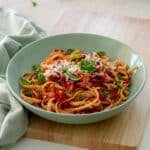
Tomato and Bacon Pasta
This tomato and bacon pasta has a thick, rich and flavourful tomato sauce with garlic, fresh herbs and crispy bacon. Perfect for busy evenings, this quick and easy recipe is ready in under 20 minutes, using a handful of everyday ingredients.
Servings: 4
Calories: 597kcal
Ingredients
- 400 grams linguine or other pasta of choice
- 2 tablespoons olive oil
- 500 grams bacon diced
- 1 red onion finely diced (or use brown onion)
- 3 cloves garlic crushed (or add more if preferred)
- 800 grams crushed tomatoes (2 x 400 gram cans)
- 1 teaspoon ground paprika Sweet Hungarian paprika (not hot or smoked paprika)
- salt and pepper to taste
- ½ teaspoon red chilli flakes or more or less, to taste
- sugar may or may not be required (only needed to balance the acidity of the tomatoes, if needed). See notes below.
To serve
- fresh parmesan grated or shaved
- fresh parsley and/or basil chopped
Instructions
- Bring a large pot of salted water (see note #8) to the boil. Add your pasta of choice and cook according to the packet instructions, to al dente (tender, but with a bit of bite).
- Before draining the pasta, reserve one cup of the starchy pasta water for the sauce. Drain the pasta and set aside.
For the tomato and bacon sauce
- * Make the sauce while the pasta is cooking, so that everything is ready to toss together at the same time.
- In a large frying pan, fry the bacon and olive oil over medium-high heat until crisp and golden. Keep any excess bacon fat in the pan (don't drain).
- Add the onion and garlic and continue frying until soft and translucent.
- Add the canned tomatoes, paprika, salt, pepper and chilli flakes and bring to a low simmer for around 5 minutes, until the sauce has thickened slightly.
- Taste the tomato sauce and if it tastes slightly acidic, add a pinch of white or brown sugar to balance. Only add a pinch of sugar and only use it if the sauce is slightly acidic. See note #3.
- Stir the drained pasta through the tomato sauce, along with some of the reserved pasta water (¼ cup at a time, until the pasta sauce reaches your desired consistency).
- Stir until the pasta is completely coated in the sauce and then serve with some freshly grated parmesan, chopped parsley and/or basil leaves.
Video
Notes
- Pasta – any kind of fresh or dried pasta can be used in this recipe. I use linguine or fettuccine, but feel free to switch for your favourite shape. Penne, rotini or shells are great shapes for holding sauce.
- Pasta water – starchy pasta water is used to bind the sauce, add flavour and make the sauce rich and silky. It also helps the sauce stick to the pasta. Once the pasta is cooked, reserve one cup of the pasta water and set it aside before draining the pasta. You may not need to use the whole cup (add a little at a time until the sauce reaches your desired consistency), but any leftover pasta water can be frozen and used to loosen the pasta sauce when reheating.
- Sugar - canned tomatoes can vary in acidity. Taste your pasta sauce and if it is slightly acidic, I recommend adding a small pinch of white or brown sugar. You should add enough sugar to balance the acidity, without making the sauce taste sweet.
- Cook the pasta al dente – cook the pasta until it is tender, but still has some bite to it. Al dente pasta will hold its shape better when tossed through the sauce and won’t become mushy.
- Add some chilli powder or extra red chilli flakes if you want a little heat.
- Cook the bacon until very crisp before adding the onion. The crispy bacon can be removed from the pan and added to the sauce at the end to keep it extra crisp, if desired.
- Feel free to add some fresh cherry tomatoes. Add them to the sauce as it simmers and cook them until they burst.
- To prepare the pasta and flavour the pasta water, add one teaspoon of salt to every litre of water.
- Don’t forget to reserve the pasta water! It helps to finish the sauce.
- Add protein – make the pasta stretch a little further by adding a pre-cooked protein like grilled or roasted chicken, sausage or beef.
- Add veggies – sauté some vegetables along with the onion and garlic for an extra veggie boost. Try some grated or sliced zucchini, broccoli, asparagus or red capsicum. You can also stir through a few handfuls of baby spinach leaves at the end, until wilted.
- Garnish with fresh herbs – I use fresh parsley or basil, but you can use other fresh herbs like oregano or thyme.
- Storage; The finished pasta (tossed through the sauce) can be stored in the fridge for 2-3 days in an airtight container.
- Reheat leftover pasta in a large frying pan over medium-low heat, with a splash of pasta water to loosen. Heat until steaming hot and serve immediately.
- The sauce can be made 1-2 days in advance and gently heated before being tossed with cooked pasta. The sauce can also be frozen for up to 3 months. Thaw completely and then transfer to a saucepan and bring to a gentle simmer before tossing with freshly cooked pasta and a little pasta water.
- The nutrition information is based on the pasta being divided onto 4 bowls, with one bowl being one serve. The nutritional information is an estimate only and does not take into account any additional toppings or sides served with the pasta.
- This recipe is made using Australian metric cup and spoon measurements. Due to cup sizes varying from country to country, I advise adjusting if necessary.
Nutrition
Calories: 597kcal | Carbohydrates: 78g | Protein: 39g | Fat: 14g | Saturated Fat: 4g | Polyunsaturated Fat: 1g | Monounsaturated Fat: 5g | Sodium: 2513mg | Potassium: 290mg | Fiber: 4g | Sugar: 4g | Vitamin A: 322IU | Vitamin C: 3mg | Calcium: 34mg | Iron: 2mg